

Plant Incorporated Protectants Market is expected to reach US$ 336.25 million by 2031 | DataM Intelligence
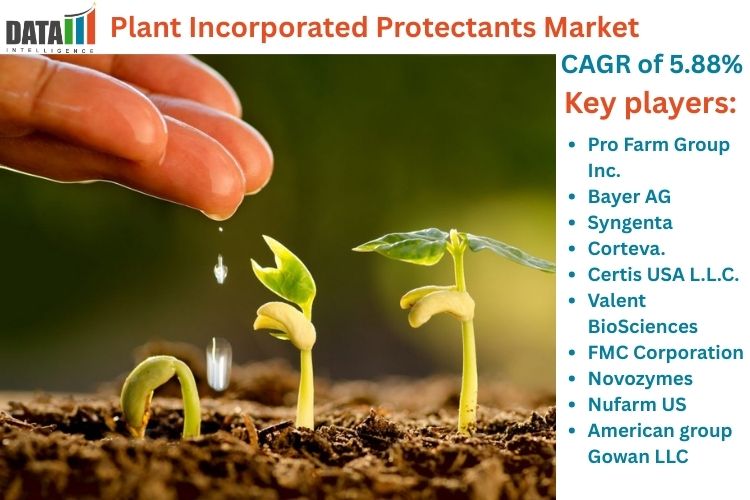
Plant Incorporated Protectants Market
The Global Plant Incorporated Protectants Market is expected to reach at a CAGR of 5.88% during the forecast period 2024-2031.
The Plant‑Incorporated Protectants Market is poised for robust expansion, driven by rising demand for sustainable crop protection solutions and biotech innovation.”
AUSTIN, TX, UNITED STATES, March 5, 2026 /EINPresswire.com/ -- Market Overview: — DataM Intelligence
The global Plant Incorporated Protectants Market is experiencing a significant upward trajectory, driven by increasing demand for sustainable agriculture and rising awareness about crop protection solutions. Plant Incorporated Protectants are genetically engineered traits within plants that produce substances to protect crops from pests, diseases, and weeds, reducing the need for chemical pesticides. These innovations offer farmers enhanced yield, improved crop quality, and a safer environmental footprint, making PIPs a critical segment in modern agriculture. As the agriculture sector faces pressures from climate change, food security demands, and regulatory policies, the adoption of PIPs is expected to accelerate globally.
To Download Sample Report Here: https://www.datamintelligence.com/download-sample/plant-incorporated-protectants-market
According to DataM Intelligence, The Global Plant Incorporated Protectants Market was valued at approximately USD 212.89 million in 2022 and is projected to reach USD 336.25 million by 2031, growing at a compound annual growth rate (CAGR) of 5.88% during the forecast period. The market is primarily driven by the growing adoption of genetically modified crops, increasing prevalence of pest infestations, and a shift towards eco-friendly crop protection methods. Among product types, insect-resistant PIPs dominate the market due to their proven effectiveness in controlling major agricultural pests. Geographically, North America leads the market, attributed to well-established biotechnology infrastructure, favorable regulatory frameworks, and high adoption rates of genetically modified crops in countries such as the United States and Canada.
Key Highlights from the Report:
The Global Plant Incorporated Protectants Market is projected to grow at a CAGR of 5.88% from 2024 to 2031.
Insect-resistant PIPs are the leading product type, accounting for the largest market share.
North America holds the dominant position in the market due to strong biotech adoption.
Rising demand for sustainable and eco-friendly farming practices is driving market expansion.
Increasing prevalence of pest infestations in major crops is a significant growth driver.
Growing investments in agricultural biotechnology research and development are fueling innovation in PIPs.
Market Segmentation:
The Plant Incorporated Protectants Market is segmented based on product type, crop type, and end-user. By product type, the market is dominated by insect-resistant PIPs, followed by herbicide-tolerant and disease-resistant variants. Insect-resistant PIPs, particularly those engineered with Bacillus thuringiensis (Bt) genes, are widely adopted in corn, cotton, and soybean cultivation due to their efficacy against common pests such as bollworms and corn borers.
Segmentation by crop type shows that major crops including maize, cotton, soybean, and vegetables are significant contributors to market growth. Maize remains the leading crop segment, given its extensive cultivation and vulnerability to multiple insect pests. Cotton follows closely, as PIPs reduce the dependency on conventional pesticides, resulting in higher profitability for farmers.
End-user segmentation focuses on commercial farming operations, smallholder farms, and research institutions. Commercial farms represent the largest share due to their extensive acreage and higher investment capacity for biotechnology-based crop protection solutions. Meanwhile, research institutions contribute by developing novel PIP traits and advancing field trials to support widespread adoption.
Speak to Our Analyst and Get Customization in the report as per your requirements: https://www.datamintelligence.com/customize/plant-incorporated-protectants-market
Regional Insights:
North America continues to dominate the Plant Incorporated Protectants market, primarily due to the extensive adoption of genetically modified crops, particularly in the United States, which accounts for the majority of regional demand. Favorable regulatory frameworks, advanced biotechnology infrastructure, and ongoing investments in agricultural R&D bolster market growth in this region.
Europe follows, witnessing steady adoption driven by countries such as Spain and Germany, where farmers are increasingly adopting biotech solutions despite stringent regulatory policies. The Asia-Pacific region is emerging as a high-growth market, led by China, India, and Australia, fueled by increasing awareness about sustainable agriculture, government initiatives promoting biotech crops, and a growing need to enhance crop yields for food security.
Latin America is also notable, with Brazil and Argentina expanding PIP cultivation to mitigate pest infestations in major crops like soybean and maize.
Market Dynamics:
Market Drivers
The Plant Incorporated Protectants Market is primarily driven by the need for sustainable agricultural practices that reduce chemical pesticide usage. Farmers are increasingly turning to PIPs to protect crops from insects and diseases while minimizing environmental impacts. The growing prevalence of pest infestations, particularly in staple crops like corn, cotton, and soybean, further propels the market. Technological advancements in genetic engineering, alongside rising investments in agricultural biotechnology, are enabling the development of more efficient and targeted PIP traits, increasing adoption across regions.
Market Restraints
Despite its growth potential, the PIPs market faces challenges related to regulatory approvals and public perception. Stringent regulations surrounding genetically modified crops, particularly in Europe and parts of Asia, can slow market entry and adoption. Additionally, concerns regarding biosafety, long-term environmental impacts, and ethical debates around GMOs may hinder widespread acceptance among certain farmer segments and consumers.
Market Opportunities
The global shift towards eco-friendly and sustainable farming presents significant opportunities for PIP providers. Developing countries in Asia-Pacific and Latin America are emerging as lucrative markets due to rising population demands and increasing government support for biotechnology-based agriculture. Furthermore, innovations in multi-trait PIPs that offer combined resistance against insects, diseases, and herbicides are expected to unlock new growth avenues. Strategic collaborations between biotechnology companies and agricultural firms can further enhance market penetration and technological advancement.
Looking For Full Report? Get it Here: https://www.datamintelligence.com/buy-now-page?report=plant-incorporated-protectants-market
Frequently Asked Questions (FAQs):
How big is the Plant Incorporated Protectants Market globally?
Who are the key players in the global Plant Incorporated Protectants market?
What is the projected growth rate of the Plant Incorporated Protectants market?
What is the market forecast for PIPs in 2032?
Which region is estimated to dominate the Plant Incorporated Protectants industry through the forecast period?
Company Insights:
Key players operating in the Plant Incorporated Protectants Market include:
Pro Farm Group Inc.
Bayer AG
Syngenta
Corteva.
Certis USA L.L.C.
Valent BioSciences
FMC Corporation
Novozymes
Nufarm US
American group Gowan LLC
Recent Developments:
United States:
January 2026: EPA launched a biopesticides webpage for PIP-related registrations, improving transparency on approvals.
December 2025: USDA provided $75 million in funding for plant protection research, aiding PIP innovation and trait-based pest control.
November 2025: PI Industries pursued acquisition of Plant Health Care, boosting biological crop protection including PIP capabilities for the U.S. market.
November 2025: U.S. federal agencies updated the EPA registry for Section 3 Plant-Incorporated Protectants, advancing approvals for new pest-resistant crop traits.
Japan:
January 2026: Green Food System Strategy enabled fast-track approvals for microbial biopesticides, potentially aiding PIP market entry.
December 2025: Growers boosted bioinsecticide use in fruits and vegetables for residue-reduced pest control, supporting PIP-aligned sustainable practices.
November 2025; BASF submitted regulatory dossiers to Japanese authorities for Prexio Active, a new insect protection product for rice, initiating its local registration process with potential PIP applications.
Unlock 360° Market Intelligence with DataM Subscription Services: https://www.datamintelligence.com/reports-subscription
Conclusion:
The Plant Incorporated Protectants Market is poised for sustained growth over the next decade, driven by technological innovations, growing awareness of sustainable agriculture, and increasing demand for high-yield crops. Insect-resistant PIPs dominate the market, while multi-trait and disease-resistant variants are emerging as significant growth segments. North America continues to lead the global market, but Asia-Pacific and Latin America present high-growth opportunities. Despite challenges such as regulatory hurdles and public perception issues, the market remains robust, offering ample prospects for investors, agricultural firms, and biotechnology developers. As the world increasingly prioritizes eco-friendly and efficient crop protection, the PIPs market is set to play a pivotal role in shaping the future of agriculture.
Related Reports:
Pesticide Inert Ingredients Market
Pesticides Integrated Pest Management Market
Sai Kumar
DataM Intelligence 4market Research LLP
+1 877-441-4866
sai.k@datamintelligence.com
Visit us on social media:
LinkedIn
X
Legal Disclaimer:
EIN Presswire provides this news content "as is" without warranty of any kind. We do not accept any responsibility or liability for the accuracy, content, images, videos, licenses, completeness, legality, or reliability of the information contained in this article. If you have any complaints or copyright issues related to this article, kindly contact the author above.
